Eastern Mojave Vegetation
Edited by Tom Schweich
|
Eastern Mojave Vegetation
| Miscellaneous Notes on the Colorado Flora (Continued) |
|
Edited by Tom Schweich |

Topics in this Article: Geography Discussion -- Native Plants Literature Cited |
Miscellaneous Notes and Raw-random stuff. | |||||||||||||||||||||||||||||||||||||||||||||||||||
|
|
Discussion -- Native Plants | |||||||||||||||||||||||||||||||||||||||||||||||||||
|
Other articles:
|
Pinus aristata Engelm. “Bristlecone Pine” | |||||||||||||||||||||||||||||||||||||||||||||||||||
|
Other articles:
|
Alnus incana (L.) Moench ssp. tenuifolia (Nutt.) Brietung “Thinleaf Alder” | |||||||||||||||||||||||||||||||||||||||||||||||||||
|
Literature Cited:
Other articles:
Locations: Middle Park. Unnamed Gulch on Forest Road 189. |
Polygonum polygaloides Meissner ssp. kelloggii (E. Greene) HickmanPike-San Isabel National Forest Road 189 is about 5 miles north of Leadville on the east side of US Highway 24. As the road climbs across the alluvial slope into an unnamed gulch, this road crosses sagebrush, aspen forest, willow riparian areas, and conifer forests. I have collected along this road three times, in 2022, 2023, and 2024. The road was bulldozed in 2023, which greatly improved it. As the roads are bulldozed, an outlet ditch is also bulldozed to allow water to exit the roadway. In 2024, one year after the road was bulldozed, I found four annuals growing in an outlet ditch. Two were common, Collomia linearis and Polygonum douglasii. However, two were new to me, Polygonum polygaloides ssp. kelloggii, and Gayophytum racemosum. It is also known from several locations in the upper Mono Lake Basin, and the Bodie Hills. First known as Polygonum kelloggii Greene, published in his Flora Franciscana (Greene, 1891), our plant was subsequently reduced to a subspecies of Polygonum polygaloides in the course of updating the Jepson Manual of California (Hickman, J. C., 1984 and 1993). Early Colorado collections of P. kelloggii were made in Middle Park by both C. C. Parry and G. Vasey. Parry's collection (NY3150865) was made in 1864 and was initially determined P. polygaloides Meisn. It was annotated to P. polygaloides ssp. kelloggii by Mihai Costea in 2003, but to P. kelloggii var. kelloggii by James L. Reveal in 2010 as part of the Intermountain Flora Project. George Vasey's 1868 collection was also made in Middle Park. Initially determined Polygonum imbricatum Nutt., it was determined P. kelloggii Greene in 1937 by Louis Wheeler. The nearest collection to mine was made by Kenneth K. Mackenzie near Breckenridge in August 1901 (NY3150867, WIS308391), some 33 km. to the northeast. Weber & Wittman (#19140, COLO613505) found our plant near the city of Aspen, about 40 km. west. Our plant is also known from the Upper Mono Lake Basin, where there are collections from Slate Creek Valley and the Tioga Crest. | |||||||||||||||||||||||||||||||||||||||||||||||||||
|
Other articles:
Locations: Colorado National Monument. |
Grayia spinosa (Hook.) Moq.
| |||||||||||||||||||||||||||||||||||||||||||||||||||
|
Other articles:
Locations: Lily Lake. Twin Lakes. |
Silene menziesii HookI came across this Catchfly in the open forest near Lily Lake, writing “Caryophyllaceae” in my field notes because of the notched petals. Back in the lab I was repeatedly confused over the position of the ovary. It took a long time to realize that the petals, stamens, and ovary are elevated above the calyx by an anthophore. The first Colorado collection of Silene menziesii is that of Charles C. Parry (#137, 1861), “… from the head-waters of Clear Creek, and the alpine ridges lying east of 'Middle Park.'” There are four vouchers of this collection at BRU, GH, NY, and YU. Hall and Harbour also collected our plant, their no. 64, “ … from Pike’s Peak in the South to the headwaters of Clear Creek in the North … ” with two vouchers at BRU. The same sheet has an additional collection by Hall in 1862, and a third specimen given as Hall no. 51, made in 1871 in Oregon. The previous collections in the vicinity of Lily Lake are 25 to 30 km. distant, along the Weston Pass Road, at Twin Lakes, and along Lime Creek in the Frying Pan River basin. | |||||||||||||||||||||||||||||||||||||||||||||||||||
|
Other articles:
|
Anemonastrum canadense (L.) Mosyakin “Canadian Anemone” | |||||||||||||||||||||||||||||||||||||||||||||||||||
|
Other articles:
|
Fendlera rupicola Engelm. & A. Gray “Fendler's Cliff-Bush”
| |||||||||||||||||||||||||||||||||||||||||||||||||||
|
Other articles:
Locations: Twin Creek. |
Saxifraga bronchialis L. ssp. austromontana (Wiegand) Piper “Spotted Saxifrage”Two previous collections in Jefferson County, one in the Lost Creek Wilderness and the other in Buffalo Creek canyon. My collection 3608 was made on Twin Creek, Jefferson County, Colorado. There are 954 vouchers of collections made in Colorado. Most of them were made in the mountain ranges. Most of the collections in SEINet were made in Colorado, with just a few in Wyoming, Montana, Idaho, and Washington.
| |||||||||||||||||||||||||||||||||||||||||||||||||||
|
Other articles:
|
Oxytropis multiceps Nuttall in J. Torrey and A. GrayNative to Colorado, Nebraska, Utah, and Wyoming. Found among the Hall & Harbour collections, and Parry collections. The specific epithet multiceps is used to describe plants with a many-headed caudex or a branched, multiple-crowned rootstock. In the case of Oxytropis multiceps, it refers to the plant's habit of growing as a low, tufted mat with multiple, densely packed heads or stems emerging from the root crown. | |||||||||||||||||||||||||||||||||||||||||||||||||||
|
Literature Cited:
Other articles:
Locations: Cimarron River. |
Viola nephrophylla Greene “Northern Bog Violet”The northern bog violet was collected by Edward L. Greene in dry thickets of scrubby willows and Potentilla fruticosa, in the valley of the Cimarron River, western Colorado, 29 Aug, 1896. I have been unable to find either 1) the type specimen online, or 2) further information regarding Greene's collection. However, there is one voucher (NY323610) online for Greene on 29 Aug 1986 of Eriogonum trinervata (=E. gordonii) made at Cimarron. The specific epithet, nephrophylla, is from the Greek for "kidney shaped leaves". V. nephrophylla is a larval host plant for the silverspot butterfly (Speyeria (= Argynnis) nokomis nokomis). The author collected this violet on a northern tributary of North Twin Creek, southern Jefferson County. There one other collection in this area: Philip V. Woodhead, #43-W, Goose Creek, July 1916, RM477984. Colorado collections are concentrated in the San Juan Mountains, the Sangre de Cristo Range, and then scattered throughout the central Rocky Mountains of Colorado. Some of the older collections were originally determined V. retusa Greene.
| |||||||||||||||||||||||||||||||||||||||||||||||||||
|
Other articles:
Locations: Unnamed Gulch on Forest Road 189. |
Gayophytum racemosum Torr. & A. Gray. Blackfoot GroundsmokeIn the outlet ditch with Polygonum polygaloides ssp. kelloggii along Forest Road 189, I also found this little annual. I did not write down its characters while keying it out (Shame on me!), but I remember skipping over G. ramosissimum because of the size and proportion of the pedicels and capsules, then looking at the branching of the stems. C. C. Parry and Hall & Harbour made the earliest collections in Colorado, though we only know approximately where in the state that the collections were made. Generally, Colorado collections are in the mountains from the Front Range to the west. The closest collection to our location is DeAlton Saunders (s.n., 24 Jun 1893) at Tennessee Pass, about 7 km. to the north. This is the only other collection in Lake County, but I have to say that I am a little skeptical of Saunders' location of Tennessee Pass. Many of his collections state that Tennessee Pass is 7 miles west of Leadville, when it is actually north of Leadville. It is possible that Saunders got west mixed up with north. Alternatively, it is possible that Saunders got Hagerman Pass, which is about 7 miles west of Leadville, mixed up with Tennessee Pass. There is another collection by K. K. Mackenzie (#144, August 1901) near Breckenridge, about 35 km. to the northeast, which is also the nearest collection of Polygonum polygaloides ssp. kelloggii, above. | |||||||||||||||||||||||||||||||||||||||||||||||||||
|
Literature Cited:
Other articles:
|
Aletes anisatus (A. Gray) W. L. Theob. & C. C. Tseng. “Anise Indian Parsley”The first time I saw Aletes anisatus was at Goose Creek Trailhead, a two hour drive to southernmost Jefferson County, half of it on bone-jarring washboard of Forest Road 211. We found the plant in the first few minutes, thinking it was Aletes acaulis, then discovered the plant had an anise-like odor. Years later, while wandering around in outcrops of Pikes Peak granite along the same road, I noticed large "pools" of grus between the outcrops. In one "pool" I smelled an anise-like odor then discovered I was standing in a small patch of Aletes anisatus. No flowers, since it was mid-August, but some fruit was still on the inflorescence. Nearby I found about ten plants on a disintegrating outcrop of granite. The elevation here was 2478 m. (8130 ft.) Like many of our plants, this one has several common names. Ackerfield (2022) uses "Anise Indian Parsley." Other common names are "Rocky Mountain Aletes," and "Rocky Mountain Indian Parsley" In Colorado, the native Anise Indian Parsley (Aletes anisatus) lives on sparse, rocky ground, including cliffs, talus slopes, and rock ledges. It is a high-altitude plant found in the subalpine and alpine zones of the Rocky Mountains in both Colorado and Wyoming. Its preferred sites feature shallow, rocky, and rapidly draining, coarse-textured soil with minimal development. These areas often have little to no topsoil, consisting mostly of barren rock. Gray (1863) proposed the new species Cymopterus? anisatus citing Hall & Harbour collection number 222, Gray also referred to Parry's 1861 Collection No. 157 (NY3456484). While Parry's No. 157 was annotated Pseudopteryxia anisata in the past, but it is currently determined Pteryxia hendersonii. Porter & Coulter (1874) also cite Hall & Harbour Collection No. 222 description of Cymopterus anisatus, giving Gray (1863) as the author. Theobald, Tseng, and Mathias (1963) placed our plant in Aletes. There are 154 vouchers of our plant in CCH2 and SEINet combined, of which 93 are georeferenced. Aletes anisatus is sometimes described as a Colorado endemic. However, SEINet reports ten vouchers of our plant from out of state locations; five from Utah and five from Wyoming. | |||||||||||||||||||||||||||||||||||||||||||||||||||
|
Other articles:
|
Cymopterus lemmonii (J.M.Coult. & Rose) DornAlpine False Springparsley — Cymopterus lemmonii (J. M. Coult. & Rose) Dorn — is one of the more common springparsleys. Not found in Golden, and found sparingly in the foothills of Jefferson County, it is common in the Rocky Mountains, the San Juan Mountains, and other smaller identified ranges. Occurs very sparingly in northwest Colorado and not al all on the plains. The author has collected it in Jefferson, Park, and Lake Counties. Our plant has received a number of names, from Thaspium ? montanum A. Gray, given to a Fendler collection in 1847 near Santa Fe, then various names in Ligusticum, Pseudocymopterus, Peucedanum, Lomatium, until Cymopterus lemmonii (J. M. Coult. & Rose) Dorn (1977). For a time it carried two names from widely disparate locations, until Dorn put the names together.
| |||||||||||||||||||||||||||||||||||||||||||||||||||
|
Other articles:
|
Heracleum maximum Bartram “American Cow-Parsnip”
| |||||||||||||||||||||||||||||||||||||||||||||||||||
|
Literature Cited:
Other articles:
Locations: Brumley. Independence Pass. |
Ligusticum tenuifolium S. WatsonI found Coll. No. 3399 of Ligusticum tenuifolium along the North Fork of Lake Creek about 0.4 miles north of Brumley. It was uncommon in water-saturated soil in a willow thicket along former creek channels. There are three other collections of this plant in Lake County, the closest being about 2 km. northwest near the top of Independence Pass. The oldest Colorado collections as Hall & Harbour #316 made in the mountains of Colorado in 1862. A John Wolf collection (#721, 1873) is the next oldest collection. Ligusticum tenuifolium was proposed by Watson (1879) who noted, “ … leaves much more finely divided even than in L. filicinum, and fruit very different ... ” Mathias & Constance (1941) reduced L. tenuifolium to a variety of L. filicinum without comment or explanation. Plants of the World (2025) accepts that placement, whereas Catalog of Life (2025), Ackerfield (2022), and Welsh, et al. (1993) maintain L. tenuifolium at the rank of species.
| |||||||||||||||||||||||||||||||||||||||||||||||||||
|
Literature Cited:
Other articles:
Locations: Brumley. |
Oxypolis fendleri (A. Gray) HellerI have found Oxypolis fendleri (A. Gray) Heller “Fendler's Cowbane” along the North Fork of Lake Creek at Brumley and along the creek near Forest Road 189. It is very likely also along West Tennessee Creek and I am surprised that I have not yet found it there. Oxypolis fendleri is mostly a Colorado species, occurring in the Rocky Mountains and the San Juan Mountains. It is also found in the Medicine Bow Mountains of southern Wyoming, and the Sangre de Cristo Mountains of northern New Mexico, with a few disjunct populations in Arizona, New Mexico, and Utah. Our plant was first collected by Agustus Fendler (no. 272, 1847) along Santa Fe Creek and published by A. Gray (1849) as Archemora fendleri A. Gray. A. A. Heller (1897) collected around Santa Fe for 9 weeks, making some 240 collections, including our plant. Upon publishing his findings, Heller placed our plant in Oxypolis Raf. Our first collection in the state was C. C. Parry (#155) in 1861, followed by C. C. Parry, and Hall & Harbour (#220) in 1862. All of those collections give very general locations. There are no collections of Fendler's Cowbane in Jefferson County.
| |||||||||||||||||||||||||||||||||||||||||||||||||||
|
Other articles:
|
Apocynum androsaemifolium L. “Bitter Dogbane” | |||||||||||||||||||||||||||||||||||||||||||||||||||
|
Other articles:
|
Hackelia floribunda (Lehm.) I. M. Johnst. “Many-Flowered Stickseed” | |||||||||||||||||||||||||||||||||||||||||||||||||||
|
Other articles:
|
Lithospermum multiflorum Torrey ex A. Gray “Many Flowered Stoneseed” | |||||||||||||||||||||||||||||||||||||||||||||||||||
|
Other articles:
|
Mertensia ciliata (Torr.) G. Don var. ciliata “Tall Fringed Bluebells” | |||||||||||||||||||||||||||||||||||||||||||||||||||
|
Other articles:
|
Synthyris plantaginea (James) Benth. “White River Kittentails” | |||||||||||||||||||||||||||||||||||||||||||||||||||
|
Other articles:
|
Lonicera involucrata (Richardson) Banks ex Spreng. “Twinberry Honeysuckle” | |||||||||||||||||||||||||||||||||||||||||||||||||||
|
Literature Cited:
Other articles:
|
Artemisia campestris ssp. purshii (Hook.) CronquistName currently accepted by Flora of Colorado (Ackerfield, 2022). In my lists referred to Artemisia groenlandica Wormsk., det. T. Schweich, following Björk (2021); previously treated as A. borealis subsp. borealis (FNA 2006) or A. campestris var. purshii (Ackerfield 2022). | |||||||||||||||||||||||||||||||||||||||||||||||||||
|
Other articles:
|
Artemisia groenlandica Hornem.Collected on West Tennessee Creek. In my lists referred to Artemisia groenlandica Wormsk., det. T. Schweich, following Björk (2021); previously treated as A. borealis subsp. borealis (FNA 2006) or A. campestris var. purshii (Ackerfield 2022).
| |||||||||||||||||||||||||||||||||||||||||||||||||||
|
Other articles:
|
Artemisia tridentata Nutt. “Big Sagebrush”
| |||||||||||||||||||||||||||||||||||||||||||||||||||
|
Literature Cited:
Other articles:
|
Artemisia tridentata Nutt. subsp. vaseyana (Rydb.) Beetle “Big Sagebrush”Leila Schulz (2006) writes in the Flora of North America that “Subspecies vaseyana is the common sagebrush of mountain slopes and is the most abundant of all the subspecies of Artemisia tridentata.” There are two collections of A. tridentata that were made in Jefferson County, both subsp. vaseyana. One is on the top of Green Mountain, and the other is at Rocky Flats. | |||||||||||||||||||||||||||||||||||||||||||||||||||
|
Literature Cited:
Other articles:
|
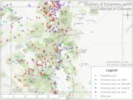
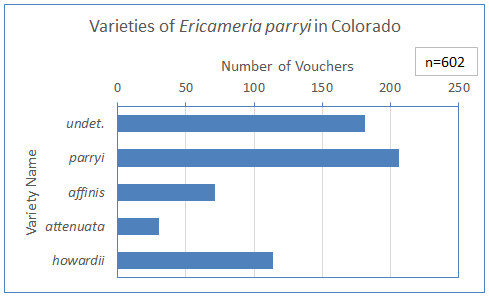
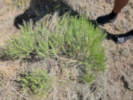
Ericameria parryi (A. Gray) G. L. Nesom & G. I. Baird “Parry's Rabbitbrush”The current Flora of Colorado (Ackerfield, 2022) accepts var. parryi, and vars. attenuata and howardii as occurring in Colorado. The same with Flora of North America (Urbatsch, et al., 2006). On the other hand a previous flora, Colorado Flora, both Eastern Slope and Western Slope (Weber & Wittmann, 2012) accepts vars. affinis and howardii, in addition to the autonym. The dissonance between var. affinis and attenuata is interesting in several ways. First, var. attenuata was originally described as a segregate from var. affinis. Both are accepted by Flora of North America (Urbatsch, wt al., 2006), Even though, some authors do not accept presence variety affinis in Colorado, there are 71 vouchers determined to that taxon. Herbarium records from SEINet and CCH2 (17 August 2026) comprise 602 georeferenced records of vouchers from collections made in Colorado. Of those, 181 are not determined to infraspecific names, 206 are variety parryi or some variant thereof, 30 are variety attenuata, 114 variety howardii, and 71 variety affinis.
All varieties are broadly distributed in the mountains of Colorado. The Rampart Range and the Sangre de Cristos mostly have varieties affinis and howardii. The northern Rockies of Colorado are home primarily to varieties parryi and howardii. | |||||||||||||||||||||||||||||||||||||||||||||||||||
|
Other articles:
|
Ericameria parryi var. affinis “Parry's Rabbitbrush”
| |||||||||||||||||||||||||||||||||||||||||||||||||||
|
|
Ericameria parryi var. howardii “Parry's Rabbitbrush”Variety howardii was described by Parry following his 1863 trip to Colorado and published by Gray (1865). Parry collected it on gravelly hills near "Hot Springs" of Middle Park. Greene (1895) and Nelson (1899) let it stand at the rank of species. | |||||||||||||||||||||||||||||||||||||||||||||||||||
|
Other articles:
|
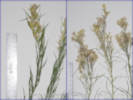
Ericameria parryi (A. Gray) G. L. Nesom & G. I. Baird var. parryi “Parry's Rabbitbrush”Variety parryi is the autonym of Ericameria parryi (A. Gray) G. L. Nesom & G. I. Baird. There are easy to detect differences between var. parryi and the other three varieties found in Colorado. It is a more robust plant, with larger leaves that overtop the inflorescence. The leaves are also stipitate-glandular, though minutely so, so it takes a microscope to see them. There are also more florets per head.
| |||||||||||||||||||||||||||||||||||||||||||||||||||
|
Other articles:
|
Erigeron subtrinervis Rydb. ex Porter & Britton “Threenerve Daisy” | |||||||||||||||||||||||||||||||||||||||||||||||||||
|
Other articles:
|
Hieracium albiflorum Hook. “White Hawkweed” | |||||||||||||||||||||||||||||||||||||||||||||||||||
|
Other articles:
|
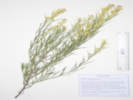
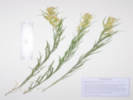
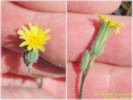
Hieracium fendleri Sch. Bip. “Fendler's Hawkweed”Not a weed at all, Fendler's hawkweed — Hieracium fendleri Sch. Bip. — is a native wildflower that
plays perfectly nice with its neighbors in pine forests and rocky slopes.
Its suny dandelion-like flowers and fuzzy silver-haired leaves provide color and interest on open forest floors.
Across its entire range, Fendler's hawkweed is found south to north
from the state of Guadalajara in Mexico to the Bear Lodge Mountains, Crook County, Wyoming,
and east to west from Cass County in northeastern Texas to near Ensenada, Baja California, Mexico.
The westernmost US location is the Hualapai Mountains, Mohave County, Arizona.
The common name comes from a legend had it that hawks ate this plant plant in order to improve their eyesight.
The first record of our plant was a collection by Agustus Fendler,
a pioneering 19th-century Prussian botanist who, with Asa Gray's support,
collected plants across New Mexico and the rugged West under dangerous conditions.
Fendler made his collection on “level grassy places along Santa Fe Creek,” now Santa Fe River.
It was described by Asa Gray (1849) as Crepis ambigua,
who was not entirely satisfied by his determination.
Schultz-Bipontius (1861) gave our plant its scientific name of Hieracium fendleri
in his article about American hawkweeds.
Other articles:
Other articles:
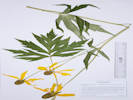
Mountain Tarweed — Madia glomerata — is the only tarweed known from Colorado.
There are few collection on the plains of Colorado, mine and one at Rocky Flats are the two from the plains of Jefferson County.
There is a small cluster of collections on the Palmer Divide.
The oldest collection of Madia glomerata was made by C. C. Parry in 1864 in Middle Park, Grand County (PH, NY, YU).
Widely distributed in the mountainous regions of the West.
The plant has also been collected by the author in the Mono Lake basin.
Other articles:
Other articles:
Other articles:
Other articles:
Other articles:
Flora of North America list five varieties, but only one, var. ampla is known in Colorado.
This is confirmed in our current flora (Ackerfield, 2022) and collections found in SEINet.
However, our penultimate flora (Weber & Wittmann, 2012) treats it as R. ampla Nelson, giving a common name of “Goldenglow.”
Other articles:
Flora of North America shows the distribution as roughly the central chain of the Rockies,
in the states of British Columbia, Montana, South Dakota, Wyoming, Colorado, New Mexico, and Arizona.
Other articles:
Other articles:
Other articles:
Locations:
Colorado National Monument.
Other articles:
Locations:
Colorado National Monument.
Other articles:
Locations:
Dispersed Camp Site #2.
I found this little annual grama grass along Forest Road 211 in southern Jefferson County,
thinking at first it looked like Vulpia octoflora.
However, dried and out of the press, it was clear the inflorescence looked more like a grama grass.
The earliest collection of B. simplex in Colorado was made by George Vasey in 1884.
The location is unknown.
Then it was collected by Tracy & Evans (#492, 1887) in Colorado City, now called Colorado Springs.
I found it in southern Jefferson County, along Forest Road 211.
The name is South American in origin, as it was described by Lagasca (1805) from a collection made in Peru.
Other articles:
Other articles:
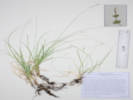
Carex leptalea (commonly known as the bristly-stalked sedge or slender sedge)
is a delicate, grass-like perennial plant in the sedge family (Cyperaceae).
C.leptalea requires continuously wet, saturated soils and is frequently found in moss and Sphagnum mats, fens, marshes, and damp coniferous woodlands.
The plant grows in loose to dense tufts of thin, wiry, and often arching stems (culms) that typically reach 15 to 70 cm in height.
The leaves are deep green, soft, and narrow (blades 0.4 to 1.3 mm wide) that often droop and create a delicate,
lawn-like appearance beneath willow thickets or forest canopies.
Unlike many sedges that have clustered spikes, it produces just a single, small, and inconspicuous spike at the tip of each stem (about 4 to 16 mm long).
The spike is androgynous, meaning it contains both male (staminate) flowers at the very top and a few female (pistillate) flowers below it.
The perigynium is green, faintly veined, and essentially beakless.
These seeds, known as achenes, are 3-sided.
C. leptalea is native to much of North America,
stretching from Alaska to Labrador, and reaching south to California and Florida.
There are 7042 vouchers of C. leptalea in CCH2 and SEINet, of which 3171 are georeferenced.
In Colorado, C. leptalea is a tracked rare plant (CNHP, 2026), rated S2 - Imperiled.
There are 9 reliably georeferenced collections from Colorado.
The first collections were by Hall & Harbour in 1862, followed by a widely distributed collection by John Wolfe in 1873 at Twin Lakes.
The sedge was not known from Jefferson County until I found it on North Twin Creek in 2025.
Other articles:
Date and time this article was prepared:
10/2/2026 12:38:16 PM
|